 Call Us: 214-585-0050
  Find A Location
  sales@graphicInstallationteam.com
Walk into a retail store, office lobby, restaurant, or airport terminal, and you’ll probably notice graphics everywhere. Window displays catch attention from the street. Murals shape the mood of a room. Vehicle wraps turn company vans into moving billboards.
What most people don’t see is the material behind those graphics.
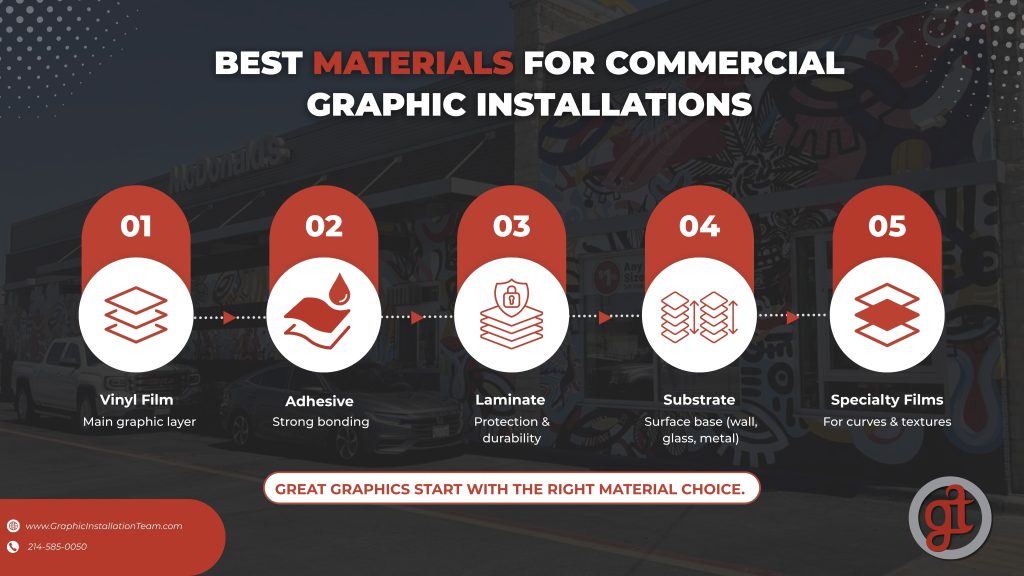
The surface film, adhesive, laminate, and substrate all affect how long a graphic lasts and how it looks after months or years of daily exposure. A beautiful design can fail quickly if the wrong material is chosen. On the flip side, the right combination can keep colors bright and surfaces smooth long after installation day.
That’s why professional installers spend a lot of time selecting materials before a project even begins. The choice depends on where the graphic will live, what surface it attaches to, and how long it needs to stay in place.
Let’s walk through the materials businesses often rely on for super graphic installations and why each one works so well.
Why Material Choice Matters in Commercial Graphics
A graphic installation is more than printing a design and sticking it to a wall. Every location presents its own challenges.
Outdoor graphics deal with sunlight, rain, wind, and temperature swings. Indoor graphics might be exposed to cleaning chemicals, heavy foot traffic, or textured surfaces.
If the material doesn’t match the environment, problems show up quickly:
- Edges start peeling
- Colors fade earlier than expected
- Bubbles appear under the surface
- Adhesive leaves residue after removal
Material selection prevents those headaches. It also affects how smooth the final result looks. A film designed for curved surfaces behaves very differently from one meant for flat glass.
Experienced installers often think about these details before the first piece of vinyl even touches the surface.
Vinyl Films: The Most Common Material for Commercial Graphics
Vinyl film sits at the center of most commercial graphic work. You’ll find it on storefront windows, walls, vehicles, and even floors.
Cast Vinyl
Cast vinyl is widely used for long-term graphics. It starts as a liquid mixture poured onto casting sheets, forming a thin, flexible film.
That flexibility allows it to conform to curves, rivets, and uneven surfaces. For vehicle wraps or textured walls, that makes a big difference.
Benefits of cast vinyl include:
- Long outdoor lifespan
- Excellent conformability
- Strong color retention
- Smooth finish after installation
Because it’s thinner and more stable, cast vinyl tends to perform well for projects that need to last several years.
Calendered Vinyl
Calendered vinyl goes through heated rollers during production, which makes it thicker and slightly less flexible.
It’s often used for:
- Window graphics
- Short-term signage
- Flat wall surfaces
- Promotional displays
The lifespan is usually shorter than that of cast vinyl, though it still works well for many indoor and short outdoor uses.
Adhesive Systems: The Hidden Hero Behind Every Graphic
The adhesive layer is easy to overlook, yet it plays a huge role in how clean the installation looks.
Different adhesive systems serve different purposes.
Permanent Adhesive
Permanent adhesive forms a strong bond with the surface. Once applied, removal can be difficult and sometimes leaves residue.
This type is common for:
- Long-term outdoor graphics
- Building signage
- Fleet vehicle wraps
Removable Adhesive
Removable adhesive allows graphics to be taken down later with minimal surface damage.
Retail stores often choose removable films for seasonal campaigns or changing promotions.
Repositionable Adhesive
Some premium vinyl films include air release channels and repositionable adhesive. These features allow installers to move the graphic service slightly during placement.
That reduces air bubbles and helps achieve a smoother finish.
Laminates: Protection for Printed Graphics
Printing a graphic is only the first step. Once the ink dries, the surface still needs protection.
Laminates act as a clear shield placed over printed vinyl.
They guard against:
- Scratches
- Sun exposure
- Moisture
- Cleaning chemicals
Without a laminate layer, printed graphics often fade faster or show wear earlier.
Gloss Laminate
Gloss laminate adds shine and boosts color intensity. Many storefront graphics use gloss because it helps the artwork stand out.
Matte Laminate
Matte laminate reduces glare and reflections. Offices and museums often choose this finish for interior wall graphics where lighting could cause reflections.
Textured Laminate
Floor graphics often rely on textured laminates designed for traction. These materials help prevent slipping while still protecting the print underneath.
Window Graphic Materials
Glass surfaces open the door to several specialized materials.
Businesses use window graphics for advertising, privacy, branding, and decorative design.
Perforated Window Film
Perforated film contains tiny holes that allow people inside the building to see out while the graphic remains visible from the outside.
It’s commonly used for:
- Storefront advertising
- Vehicle rear windows
- Building branding
The design is printed on the outer side, while the holes maintain visibility from inside.
Frosted Window Film
Frosted vinyl creates a sandblasted glass look without permanently altering the glass.
You’ll often see it in:
- Office conference rooms
- Medical clinics
- Glass partitions
It provides privacy while still allowing light to pass through.
Static Cling Film
Static cling graphics stick without adhesive. They rely on static charge and smooth glass contact.
Retail stores like this material for short promotions because the graphic can be removed and reused easily.
Wall Graphic Materials
Walls vary widely. Some are smooth painted drywall, while others have brick, concrete, or textured finishes.
Different vinyl films handle these surfaces better than others.
Smooth Wall Vinyl
Smooth wall vinyl works well on painted drywall and other flat interior surfaces. It produces crisp edges and strong adhesion when the wall surface is properly prepared.
This material often appears in:
- Office branding displays
- Retail murals
- Interior advertising graphics
High-Tack Vinyl
High-tack vinyl uses a stronger adhesive designed for slightly rough surfaces.
Installers sometimes choose it for:
- Concrete walls
- Brick surfaces
- Industrial interiors
Fabric-Based Wall Graphics
Some indoor graphics use fabric materials instead of traditional vinyl. These materials create a softer texture and can often be repositioned during installation.
They are popular for temporary displays and trade show graphics.
Vehicle Wrap Materials
Fleet graphics and vehicle wraps rely on highly specialized materials. Vehicles include curves, panel gaps, rivets, and tight corners.
Standard vinyl simply doesn’t perform well in those conditions.
Wrap Cast Vinyl
Wrap cast vinyl is engineered for vehicle surfaces. It stretches without losing shape and holds firmly once installed.
Most professional wrap films include air release channels in the adhesive layer. That allows trapped air to escape during installation.
Wrap Laminates
Vehicle wraps also receive protective laminate layers designed for outdoor exposure. These laminates guard the printed surface against:
- Sun exposure
- Road debris
- Car washes
- Fuel spills
A well-installed wrap using quality materials can last several years when maintained properly.
Floor Graphic Materials
Floor graphics appear in retail stores, trade shows, airports, and event venues. These graphics guide traffic, share messages, or highlight product areas.
The materials used for floor graphics must handle constant foot traffic.
Floor Vinyl
Floor vinyl includes a stronger adhesive that bonds securely to tile, concrete, or sealed floors.
Anti-Slip Laminates
Safety plays a big role here. Anti-slip laminates create texture on the surface so people can walk safely over the graphic.
These laminates often meet safety ratings for slip resistance.
Rigid Substrates for Mounted Graphics
Not every graphic sticks directly to a surface. Some are printed and mounted onto rigid boards.
These substrates appear in many commercial environments.
PVC Boards
PVC boards are lightweight and durable. They work well for indoor signage, wall displays, and trade show graphics.
Aluminum Composite Panels
Aluminum composite panels combine metal sheets with a plastic core. They are strong and resist weather conditions, making them popular for outdoor signage.
Acrylic Panels
Acrylic panels create a sleek, glossy appearance. Many office lobbies use acrylic graphics for brand displays or reception signage.
Environmental Factors That Affect Material Choice
Material selection also depends on environmental conditions.
Professional installers often ask questions such as:
- Will the graphic sit in direct sunlight?
- Does the surface face rain or humidity?
- How long should the graphic remain in place?
- Will the graphic need removal later?
Sun exposure affects color longevity. Moisture affects adhesive bonding. Surface texture changes how vinyl conforms during installation.
Matching materials with these conditions helps avoid early failure.
The Role of Surface Preparation
Even the best material can struggle if the surface isn’t prepared correctly.
Installers often clean and prepare surfaces before applying graphics. Dust, oils, and cleaning residue can interfere with adhesive bonding.
Common preparation steps include:
- Cleaning surfaces with alcohol solutions
- Removing dirt and debris
- Checking paint curing times on walls
- Measuring surface temperature
These small steps help ensure the graphic stays smooth and secure.
Why Professional Installation Still Matters
High-quality materials are only part of the story. Installation technique plays an equally large role.
Experienced installers know how vinyl behaves when stretched, heated, or applied to complex surfaces. They also understand how environmental factors affect adhesive performance.
Small mistakes during installation can cause visible problems later.
Air bubbles, wrinkles, and lifting edges often trace back to installation errors rather than material flaws.
Businesses that rely on experienced installers often see better results and longer graphic life.
Choosing Materials for Long-Term Brand Visibility
Commercial graphics serve more than decorative purposes. They help businesses stay visible and communicate brand identity to customers.
When materials match the environment and surface type, graphics remain clean, vibrant, and professional-looking for years.
From storefront windows to vehicle wraps and office interiors, the right material helps ensure the design continues doing its job every day.
Businesses working with experienced installers often benefit from guidance on these choices. Teams such as the frequently help clients match materials with the project environment, ensuring graphics perform well from day one through the life of the installation.
Conclusion
Behind every polished graphic installation is a thoughtful material selection process. Vinyl films, adhesives, laminates, substrates, and surface preparation all work together to create a finished result that looks clean and lasts.
Each material plays a specific role. Cast vinyl handles curves and long outdoor use. Laminates shield printed graphics from wear and sun exposure. Window films provide privacy or visibility depending on the design. Rigid panels create durable signage where direct application isn’t possible.
When these materials are chosen carefully and installed by experienced hands, commercial graphics become reliable tools for business visibility. From storefront displays to full fleet wraps, the right combination keeps branding clear, durable, and ready to catch attention.
Businesses planning large graphics projects often work with professionals like the Graphic Installation Team to ensure material selection and installation meet the demands of the environment and the expectations of the brand.
