 Call Us: 214-585-0050
  Find A Location
  sales@graphicInstallationteam.com
In any busy shopping center or office building, two things can be seen everywhere: graphics and signs.
A window covered with bold branding. A lobby wall filled with company visuals. A glowing storefront name above a door.
At first glance, all of these might look like the same type of work. Many business owners even use the terms interchangeably. Yet graphic installation and sign installation are two different services with different materials, tools, and installation methods.
Understanding the difference makes planning easier when opening a new location, updating branding, or adding visibility to a storefront. It also helps avoid hiring the wrong service for the job.
Let’s break down how these two services differ and when each one makes sense.
What Is Graphic Installation?
Graphic installation focuses on applying printed visual materials to surfaces. These graphics usually come from vinyl, printed films, laminates, or specialty materials designed to stick to walls, windows, floors, or vehicles.
The goal is visual communication. Graphics deliver brand messaging, advertising, decoration, or information without needing heavy structural components.
You’ll see graphic installation used in places such as:
- Retail stores
- Office interiors
- Restaurants
- Hospitals
- Airports
- Event spaces
- Commercial vehicles
Instead of large frames or metal structures, the installer works with flexible materials that must be aligned carefully and applied without bubbles, wrinkles, or stretching.
A smooth application takes patience and experience. Even a small mistake can ruin the finished look.
For example, a mural inside a corporate office may come in several printed panels. Each piece must line up perfectly so the design appears seamless.
It sounds simple, though it rarely is.
What Is Sign Installation?
Sign installation deals with physical signage structures that identify a business or direct people around a property.
These signs often include rigid materials like aluminum, acrylic, steel, plastic, or illuminated components. Some involve electrical wiring, mounting hardware, or structural supports.
Common examples include:
- Storefront channel letters
- Monument signs at property entrances
- Pylon signs near roadways
- Directional signs in shopping centers
- Interior wayfinding signs in large buildings
Unlike graphics, signs usually require mounting systems attached to buildings, poles, or ground structures.
Because they are permanent fixtures, installation often requires:
- Structural mounting
- Electrical connections
- Building permits
- Safety equipment, such as lifts or cranes
Sign installers must understand building materials, electrical safety, and local code rules.
The Core Difference Between Graphics and Signs
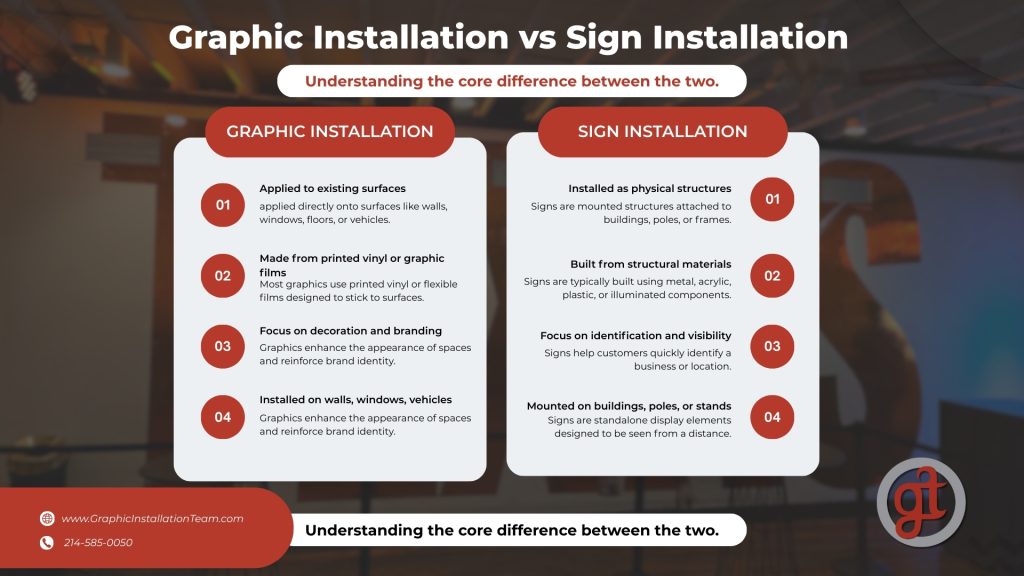
So what really separates the two?
The difference comes down to structure versus surface.
Graphic installation focuses on applying visual material directly onto surfaces. The structure already exists, whether it’s a wall, window, or vehicle.
Sign installation deals with building and mounting a physical object that stands on its own or attaches to a structure.
Another way to think about it:
Graphics decorate surfaces.
Signs create structures that display a message.
Both serve branding and visibility, though the way they are installed is completely different.
Types of Graphic Installations Businesses Use
Graphics appear almost everywhere in modern commercial spaces. Many businesses rely on them because they are flexible, visually striking, and easier to update than permanent signage.
Here are some common examples.
Wall Graphics
Wall graphics turn blank walls into branded spaces.
Offices often use them for mission statements, company timelines, or branded patterns. Retail stores use them for product visuals or lifestyle imagery.
Large murals can stretch across entire hallways or conference rooms, creating a strong visual identity.
Window Graphics
Window graphics serve two purposes. They attract attention and offer privacy.
Restaurants, salons, and retail shops often cover storefront windows with printed vinyl designs that show hours, logos, or promotional images.
Perforated window film even allows people inside to see out while displaying a full image on the exterior.
Floor Graphics
Floor decals appear in grocery stores, airports, trade shows, and hospitals.
They guide foot traffic, highlight promotions, or mark safety zones.
These graphics must handle heavy foot traffic, so installers use thicker materials and special adhesives.
Vehicle Graphics
Vehicle wraps and fleet graphics turn cars, vans, and trucks into moving advertisements.
Installing graphics on vehicles requires careful alignment across curves, door seams, and handles. Heat tools help the vinyl stretch and conform to the body of the vehicle.
Types of Sign Installations
Sign installation focuses on larger structures that represent a business from a distance.
Storefront Signs
Most retail stores rely on storefront signage above the entrance.
Channel letters are common. Each letter may contain internal lighting, which makes the brand visible at night.
Installing them involves electrical work and precise mounting on the building facade.
Monument Signs
These signs sit at ground level near entrances to shopping centers, business parks, or residential communities.
They are built from stone, brick, or metal panels and often include multiple tenant listings.
Installation requires foundation work and secure anchoring.
Pylon Signs
Pylon signs are tall roadside structures designed for visibility from passing traffic.
Gas stations, shopping centers, and hotels frequently use them.
Installing one usually involves heavy equipment and strict compliance with city regulations.
Wayfinding Signs
Large hospitals, universities, and office campuses use wayfinding signs to help visitors navigate the property.
These signs guide people toward parking, entrances, elevators, or departments.
Installation Methods: Why the Process Is Different
Even though both services deal with branding visuals, the installation process is very different.
Graphic installation typically involves:
- Surface cleaning and preparation
- Measuring and leveling
- Careful vinyl application
- Removing air bubbles
- Heat-setting adhesives
Installers work slowly and precisely, often using squeegees, heat guns, and alignment tools.
Sign installation involves heavier work.
Installers may need:
- Power tools
- Drilling into walls or steel frames
- Lifts or scaffolding
- Electrical wiring
- Structural mounting hardware
Safety plays a larger role here because installers often work at heights or handle heavy materials.
Permits, Codes, and Local Rules
Many cities regulate outdoor signage.
Sign installation often requires permits before work begins. Local authorities may control:
- Sign size
- Lighting brightness
- Height restrictions
- Distance from roads
- Placement on buildings
Because of this, sign companies often coordinate with city offices during the planning stage.
Graphic installation rarely requires permits. Interior graphics usually fall outside city sign codes.
Exterior window graphics may have some restrictions in certain municipalities, though these rules are usually less complex than sign permits.
Durability and Maintenance
Both graphics and signs are built for durability, though their lifespans differ.
Vinyl graphics can last several years depending on exposure to sun, weather, and foot traffic.
For example:
- Interior wall graphics may last 7 to 10 years
- Window graphics often last 3 to 7 years
- Floor graphics may need replacement sooner due to heavy use
Signs, on the other hand, often remain in place for decades.
Channel letters, monument signs, and metal signage are designed to handle outdoor conditions for long periods with occasional maintenance.
Lighting components may need replacement over time, though the main structure usually remains.
When a Business Needs Graphic Installation
Graphic installation becomes useful when businesses want visual messaging without permanent construction.
Here are a few common situations.
Interior branding
Offices use wall graphics to reflect their culture and brand identity.
Seasonal promotions
Retail stores often install window graphics for holiday sales or product launches.
Trade shows and events
Temporary graphics allow companies to brand booths and displays quickly.
Fleet advertising
Vehicle graphics turn everyday driving into brand exposure.
Because graphics are flexible and easier to replace, they are often chosen for marketing campaigns or evolving branding.
When a Business Needs Sign Installation
Sign installation comes into play when businesses need permanent visibility.
A storefront sign identifies the business to customers walking or driving by.
Property entrances need monument signs to guide visitors.
Large buildings rely on directional signs to help guests find their way.
These structures serve as long-term identifiers for the business location.
Without them, customers might struggle to find the entrance or even realize the business exists.
When Both Services Work Together
Many commercial spaces use both graphics and signs at the same time.
Retail stores are a good example.
Outside the building, the storefront sign identifies the brand from the street.
Inside, wall graphics display product imagery and brand messaging.
Restaurants follow a similar pattern. A glowing exterior sign attracts attention, while interior graphics create atmosphere.
Offices do the same. A lobby sign greets visitors at the entrance, while wall graphics inside hallways tell the company’s story.
The two services complement each other rather than compete.
How to Choose the Right Graphic Installer
When businesses start a branding project, selecting the right installer makes a real difference.
Graphic installers must understand vinyl materials, surface preparation, and precise alignment.
Sign installers must handle structural mounting, electrical work, and safety procedures.
Some companies offer both services under one roof, which simplifies project coordination.
Working with trained professionals helps avoid issues such as peeling graphics, crooked installations, or unsafe mounting.
For businesses planning visual branding projects, experienced installers like Graphic Installation Team handle both graphic applications and signage mounting with the precision required for commercial environments.
Final Thoughts
Graphics and signs often appear side by side, though they serve different roles.
Graphics bring life to walls, windows, floors, and vehicles. They communicate messages quickly and can change as branding evolves.
Signs create permanent markers that help customers locate businesses and navigate properties.
Understanding the difference helps businesses plan better branding projects and choose the right service for each job.
When both are used together thoughtfully, the result is a space that communicates clearly, attracts attention, and feels professionally designed. For companies planning new locations or updating their visual presence, working with skilled installers at Graphic Installation Team can make the process far smoother from start to finish.
