 Call Us: 214-585-0050
  Find A Location
  sales@graphicInstallationteam.com
Walk through any busy shopping area, and you’ll see graphics everywhere. Window displays catch attention, vehicle wraps move through traffic, storefront signage stands out across the street, and large wall graphics turn plain interiors into branded spaces.
Graphics help businesses communicate without saying a word. They build recognition, guide customers, and make locations feel polished and professional. But there’s something many business owners don’t think about until installation day. Not all graphics are designed for the same environment.
Indoor and outdoor graphic installations follow very different rules. Materials change. Surfaces change. Weather becomes a factor. Even the installation process itself can vary.
If a graphic designed for indoor use ends up outside, it may fade, peel, or crack far sooner than expected. On the flip side, outdoor-grade materials installed inside can sometimes be heavier or unnecessary for the setting.
Understanding the differences helps businesses avoid costly mistakes and get longer life from their graphics.
Let’s walk through how indoor and outdoor installations really differ and what companies should know before starting a project.
What Graphic Installation Actually Means
Graphic installation is the process of applying printed materials to surfaces such as walls, windows, vehicles, floors, or signage structures.
These graphics may include:
Vinyl wall graphics
- Window decals
- Vehicle wraps
- Floor decals
- Storefront signage
- Trade show displays
- Building exterior graphics
Installation sounds simple on the surface. Stick the graphic on, and you’re done, right?
Not quite.
Professional installers prepare the surface, position the graphic with precision, remove air bubbles, trim edges, and make sure the material bonds properly. The environment plays a big role in how well that bond holds over time.
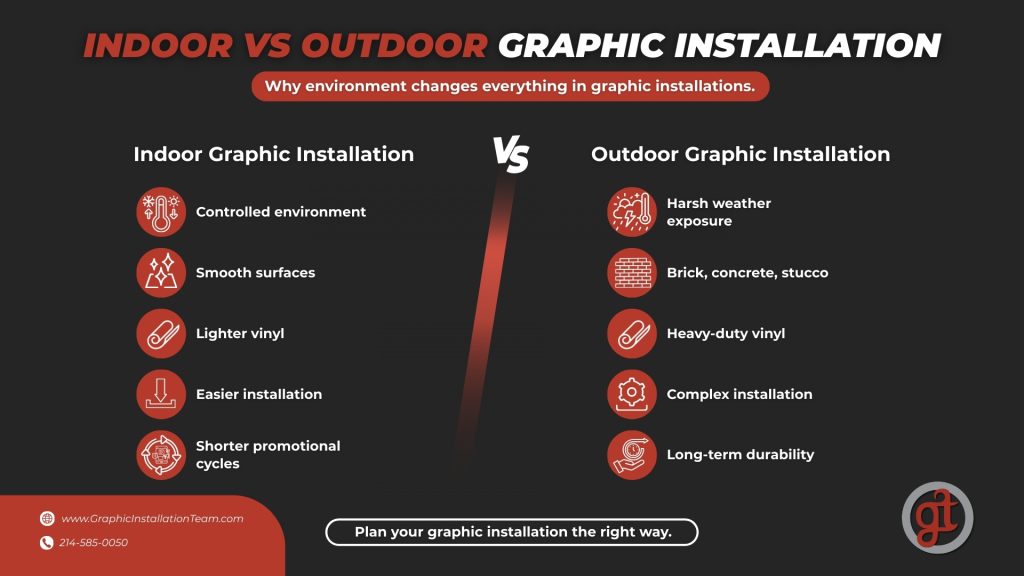
Indoor spaces usually provide controlled conditions. Outdoor installations must deal with heat, rain, wind, and sunlight. That difference alone changes almost everything about the job.
Indoor Graphic Installation: Built for Controlled Environments
Indoor graphics are designed for spaces where conditions stay fairly stable. Temperatures remain consistent. Surfaces stay dry. Direct sunlight is limited.
Because of that stability, indoor materials can focus more on visual appearance and design flexibility.
Common Indoor Graphic Applications
Businesses use indoor graphics in many ways, including:
- Office branding and murals
- Retail wall displays
- Directional signs in large buildings
- Window graphics inside malls or stores
- Trade show booths
- Decorative lobby graphics
- Event graphics
Interior graphics help shape how a space feels. A blank office hallway can become a storytelling wall about the company’s history. A retail store can guide shoppers through different sections using floor graphics.
The goal inside is often atmosphere and brand identity rather than durability against the weather.
Materials Used for Indoor Graphics
Indoor installations often rely on lighter vinyl materials with adhesives designed for clean surfaces like drywall, glass, painted walls, or acrylic panels.
Many indoor graphics also use removable adhesives. This makes updates easier. Retail stores change promotions frequently, so removable graphics help avoid damage when it’s time for something new.
Textured wall vinyl is another common option indoors. These materials are designed to conform to painted drywall or slightly textured surfaces without bubbling.
Outdoor Graphic Installation: Built to Handle the Elements
Outdoor graphics face a completely different environment. Sunlight, heat, cold, moisture, dust, and wind all affect how long graphics last.
Because of this, outdoor installations require stronger materials and a more careful installation process.
Common Outdoor Graphic Applications
You’ll often see outdoor graphics in places such as:
- Storefront window graphics
- Building signage
- Fleet vehicle wraps
- Exterior wall graphics
- Construction site banners
- Parking lot signage
- Outdoor event displays
These graphics often serve a direct marketing role. A storefront window graphic might be the first thing a customer notices when driving past a location.
That means durability matters just as much as appearance.
Materials Used for Outdoor Graphics
Outdoor materials must resist fading, shrinking, cracking, and peeling. This usually means thicker vinyl films with stronger adhesive systems.
Many outdoor graphics include protective laminates that shield the printed image from UV exposure. Without that protection, colors can fade quickly under direct sunlight.
Vehicle wraps, for example, often rely on cast vinyl designed to stretch and conform to curves while holding up against road conditions.
Installers also check the temperature during outdoor installations. Vinyl behaves differently depending on heat or cold, so timing the job correctly helps ensure the graphic bonds well.
Weather Exposure Changes Everything
One of the biggest differences between indoor and outdoor graphic installations is environmental stress.
Inside a building, graphics are mostly protected. Outside, conditions can change hour by hour.
Sunlight alone can wear down lower-grade materials in a short time. UV rays break down ink pigments and adhesives. That’s why outdoor graphics usually include UV-resistant coatings.
Rain and moisture can also affect adhesion. If water works its way behind a graphic, edges may begin lifting over time.
Wind introduces another challenge. Large outdoor graphics must be installed carefully so the edges stay sealed. Otherwise, wind pressure can cause peeling.
Installers often plan outdoor projects around weather forecasts. A dry day with moderate temperatures provides the best conditions.
Surface Types Are Often Different
The surface underneath the graphic matters just as much as the material itself.
Indoor surfaces are usually predictable. Painted drywall, glass panels, metal doors, and smooth interior walls are common.
Outdoor surfaces vary much more.
Examples include:
- Brick
- Concrete
- Stucco
- Metal panels
- Exterior glass
- Painted masonry
Some of these surfaces have rough textures. That requires special vinyl films designed to bond to uneven surfaces.
Brick wall graphics, for instance, use thick films that conform to the shape of the brick and mortar. The installation often involves heat and pressure to push the vinyl into the surface.
Trying to apply a standard indoor vinyl to brick would fail quickly.
Installation Techniques Can Differ
The installation process also changes depending on the environment.
Indoor installations often happen in controlled spaces where installers can work slowly and precisely.
Outdoor installations may require ladders, lifts, scaffolding, or specialized equipment.
Vehicle wraps add another layer of skill. Installers must heat and stretch vinyl around curves, mirrors, handles, and body lines without damaging the film.
Timing also matters outdoors. Installers may work early in the morning or later in the day to avoid extreme heat that could affect the adhesive.
Even wind speed can impact large graphic placements.
Durability Expectations Are Not the Same
Indoor graphics may last for several years, though many are designed for shorter promotional cycles.
Retail promotions may change every few months. Event graphics may only stay up for a week.
Outdoor graphics usually aim for longer durability. A vehicle wrap may last five years with proper care. Exterior signage often remains in place for several years as well.
Durability depends on many factors, including sunlight exposure, surface preparation, and the quality of materials used.
Proper installation helps extend the lifespan regardless of location.
Maintenance and Cleaning Differences
Indoor graphics rarely require much maintenance beyond occasional cleaning.
A soft cloth and mild cleaner are usually enough to remove dust or fingerprints from wall graphics or window decals.
Outdoor graphics face dirt, road debris, and environmental buildup. Vehicle wraps, for example, should be washed regularly to prevent grime from damaging the printed surface.
Pressure washing can sometimes be used on building graphics, though it must be done carefully to avoid lifting edges.
Regular inspection also helps catch early signs of wear.
Cost Differences Between Indoor and Outdoor Installations
Outdoor graphics often cost more than indoor installations. The materials alone can be more expensive due to added durability.
Other cost factors include:
- Surface preparation
- Specialized vinyl materials
- Protective laminates
- Equipment such as lifts or scaffolding
- Longer installation time
Indoor graphics usually involve fewer environmental variables, which keeps installation simpler in many cases.
Still, the cost difference depends heavily on project size and complexity.
Why Licensed Installation Makes a Big Difference
It’s tempting for businesses to try installing graphics themselves, especially smaller decals or wall designs.
Yet many projects fail because of improper surface preparation, poor alignment, or trapped air bubbles.
Professional installers understand how different materials behave and how surfaces should be cleaned and prepared.
They also know when conditions are right for installation.
A poorly installed graphic can peel within weeks. A properly installed one can last for years.
For businesses investing in branding or storefront visibility, that difference matters.
Companies that need dependable results often work with experienced providers such as ours at Graphic Installation Team, where trained installers handle both indoor and outdoor projects across many environments.
Choosing the Right Installation for Your Business
If a company is planning a new graphic project, the first question should be simple.
Where will the graphic live?
Once that answer is clear, installers can recommend the right materials and installation approach.
Businesses should consider:
- Exposure to sunlight
- Surface texture
- Expected lifespan of the graphic
- Visibility goals
- Maintenance needs
Retail storefront graphics, fleet vehicle wraps, interior murals, and construction signage all have different requirements.
A quick consultation with an experienced installation team often helps clarify the best path forward.
Final Thoughts
Indoor and outdoor graphic installation may look similar at first glance, yet the work behind them is quite different. Indoor graphic installation focuses on visual design and brand experience within controlled environments such as offices, retail spaces, and commercial interiors.
Outdoor graphic installation, however, must withstand weather, sunlight, moisture, and temperature changes. That’s why choosing the right commercial graphic materials and installation methods is essential for long-term durability and performance.
Selecting the proper materials and preparation techniques for wall graphics, window graphics, storefront graphics, or fleet graphics helps businesses avoid early wear and keeps branding looking sharp and professional.
When installed correctly, commercial graphics can turn ordinary surfaces into powerful marketing tools. From office walls to storefront windows and company vehicles, well-installed graphics help businesses capture attention and reinforce brand visibility.
Businesses planning new commercial graphic installation projects often rely on experienced professional graphic installers at Graphic Installation Team to ensure each graphic is applied properly, looks flawless, and is built to last.
