 Call Us: 214-585-0050
  Find A Location
  sales@graphicInstallationteam.com
Walk through any busy shopping street or commercial district, and you’ll see graphics everywhere. Window displays, murals, vehicle wraps, floor decals, trade show panels. They all work quietly in the background, shaping how people see a brand before a single word is spoken.
The design often gets most of the attention. Yet the installation stage decides whether that design looks sharp and long-lasting or sloppy and short-lived. A poorly installed graphic can bubble, peel, wrinkle, or fade faster than expected. When that happens, the message a business hoped to send can quickly backfire.
That’s why choosing the right graphic installer deserves real thought. The difference between a trained professional and a rushed installer becomes clear within weeks.
If you’re planning wall graphics, window films, fleet wraps, or retail signage, this guide will help you understand what separates a reliable installer from the rest.
How Professional Graphic Installation Differs
At first glance, installing graphics may seem simple. Apply the vinyl, smooth the surface, trim the edges, and you’re done. In reality, it takes skill, patience, and experience.
Commercial graphics often involve large surfaces, specialty materials, and environments that create installation challenges.
A Licensed Graphic installer understands things like:
- Surface preparation requirements
- Temperature and humidity conditions
- Adhesive behavior over time
- Proper stretching techniques for vinyl
- Clean trimming methods that avoid damage
Even small mistakes during installation can shorten a graphic’s lifespan.
For example, if a wall surface isn’t cleaned correctly, the adhesive may fail within weeks. If vehicle wrap vinyl is stretched incorrectly, it can shrink and pull away from the edges later.
Skilled installers know how to avoid those problems before they start.
The First Thing to Look For is Real Experience
Experience matters a lot in this field. Graphic installation isn’t something someone masters after a few quick projects.
Every surface behaves differently. Painted drywall acts differently from glass. Textured brick behaves differently from aluminum panels. A vehicle wrap has curves, seams, and tight corners that demand careful handling.
When evaluating installers, ask questions like:
- How long have they been installing commercial graphics?
- What types of projects have they handled?
- Do they specialize in certain installations?
A team that regularly installs fleet wraps, storefront graphics, and interior murals will understand the little details that protect your investment.
Ask to see photos of completed work. Better yet, ask if you can see installed graphics in person around your area.
Good installers are proud to show their past projects.
Certifications and Manufacturer Training
Not all installers receive formal training. Some learn through hands-on experience, while others attend manufacturer training programs.
Certifications from major material manufacturers can be a good signal of skill and knowledge.
For example, programs from companies like 3M or Avery Dennison train installers on:
- Vinyl handling techniques
- Material behavior in different conditions
- Proper installation procedures
- Warranty requirements
Certified installers usually pass hands-on tests where their work is inspected closely.
That said, certification alone does not guarantee great work. It should be viewed as one piece of the bigger picture.
Experience, reviews, and project history still matter.
Portfolio Quality Speaks Loudly
A strong portfolio often tells you more than a sales pitch.
When reviewing installation photos, pay attention to the small details:
- Are the edges clean and straight?
- Do the graphics sit flat against the surface?
- Are there visible bubbles or wrinkles?
- Do seams align properly on large graphics?
Vehicle wraps can reveal an installer’s skill quickly. Complex curves around mirrors, door handles, and bumpers require steady hands.
Interior wall graphics can show trimming accuracy and alignment.
If a portfolio only shows design mockups rather than real installed work, ask for more examples.
Real installation photos are always better.
Local Knowledge Makes a Difference
Businesses often search online for graphic installation services when a project is ready. What many people don’t realize is how helpful local experience can be.
Installers who work regularly in your region often understand:
- Local building materials used in commercial spaces
- Weather patterns that affect exterior graphics
- Local permitting requirements for signage
- Installation challenges specific to certain property types
For example, heat and sunlight can affect outdoor vinyl differently depending on the region. Installers familiar with those conditions know which materials perform better and how they should be applied.
Local experience can also make scheduling easier and reduce travel delays during larger projects.
Understanding the Installation Process
A verified graphic installer usually follows a clear process from start to finish. If an installer struggles to explain their process, that could be a warning sign.
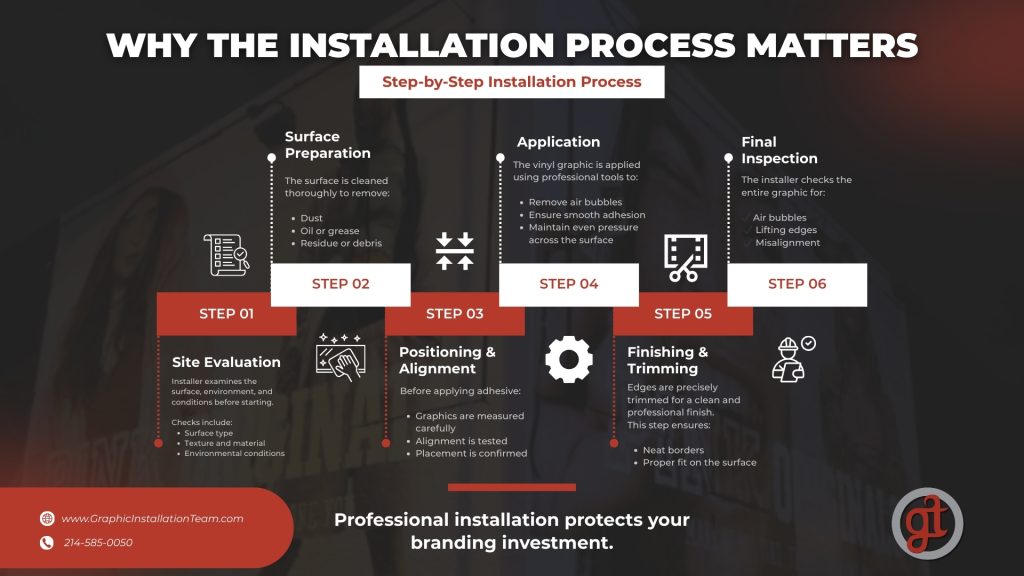
Most graphic installations follow steps like these:
Site evaluation
The installer reviews the surface and environment before the job begins.
Surface preparation
Cleaning removes dust, oils, and residues that weaken adhesion.
Positioning and alignment
Graphics are measured and aligned before adhesive contact.
Application
The vinyl is applied using specialized tools to remove air and ensure full contact.
Finishing and trimming
Edges are trimmed carefully for a clean appearance.
Final inspection
The installer checks the entire surface for bubbles, lifting edges, or misalignment.
When installers follow a consistent process, the finished result tends to last longer and look better.
Communication and Project Planning
Communication can make or break a project. A good installer explains timelines clearly and answers questions without confusion.
During early conversations, notice how the installer handles details like:
- Scheduling
- Material arrival times
- Site access requirements
- Installation duration
- Preparation steps the business must complete
Retail environments sometimes require overnight installations. Office graphics may need to be installed during quiet hours. Fleet vehicles may need to be scheduled around operations.
Clear communication keeps the project running smoothly.
Insurance and Business Credentials
Graphic installation involves ladders, lifts, tools, and sometimes large surfaces high above the ground.
Because of that, Skilled installers carry proper insurance coverage.
Ask installers whether they have:
- General liability insurance
- Worker protection coverage
- Business licensing is required
This protects both the installer and the business hiring them.
Without insurance, a workplace accident could create financial problems for everyone involved.
Responsible installers are usually comfortable providing proof of coverage.
Reviews and Reputation
Online reviews can provide useful clues about an installer’s reliability.
Look beyond the star rating. Read several reviews to see patterns.
Do customers mention things like:
- Timely project completion
- Clean installation work
- Professional behavior
- Clear communication
Pay attention to how companies respond to negative reviews as well. Professional responses show a business that cares about customer satisfaction.
Word-of-mouth recommendations also carry weight. If nearby businesses trust an installer for their graphics, that’s a good sign.
Equipment and Tools Used for Installation
High-quality installation often depends on proper tools.
Professional installers typically carry equipment such as:
- Heat guns for shaping vinyl
- Specialized squeegees
- Precision trimming blades
- Surface temperature gauges
- Lifts or scaffolding for large graphics
These tools allow installers to work safely and maintain accuracy during the installation process.
While tools alone do not guarantee skill, they help installers perform the job properly.
Understanding Materials and Durability
Not all graphics use the same materials. Vinyl films vary in thickness, adhesive type, and intended use.
Some materials are designed for:
- Long-term wall graphics
- Temporary promotional displays
- Vehicle wraps with curved surfaces
- Outdoor signage exposed to sunlight
Skilled installers know how different materials behave. They can explain which film types are appropriate for your project and how long they may last under normal conditions.
They also understand how surface type affects durability.
For example, a smooth painted wall will hold vinyl better than rough brick without special preparation.
Project Size and Team Capacity
Some installation companies handle small projects well but struggle with larger ones.
If your project involves multiple vehicles, a full storefront, or graphics across several locations, it helps to choose an installer with enough staff to manage the workload.
Ask questions like:
- How many installers are on the team?
- Have they handled similar projects before?
- How long will the installation take?
Larger projects often move faster when a trained crew works together.
This reduces business disruption and keeps schedules predictable.
Warranty and After-Installation Support
Reliable installers stand behind their work.
A warranty may cover installation issues such as lifting edges, bubbles, or premature failure caused by installation mistakes.
It’s also helpful when installers guide about:
- Cleaning graphics safely
- Avoiding harsh chemicals
- Maintenance practices that extend lifespan
Even high-quality installations can experience occasional issues. When that happens, responsive installers make the process easier.
Pricing: Why the Lowest Quote Isn’t Always the Best Choice
Price matters. Every business works with a budget.
Still, extremely low quotes often raise questions.
Quality installation requires skilled labor, preparation time, and proper equipment. If a quote seems unusually low, something may be missing from the process.
Cheap installations sometimes skip surface preparation or rush the application. That can lead to early failure and replacement costs.
When comparing installers, consider the full picture:
- Project scope
- Experience level
- materials involved
- installation complexity
The goal is not the cheapest option. The goal is a result that lasts and reflects your brand well.
Questions to Ask Before Hiring a Graphic Installer
If you’re unsure where to start, a short list of questions can help guide the conversation.
You might ask:
- How long have you been installing commercial graphics?
- Can you show examples of past projects?
- Are you trained by any vinyl manufacturers?
- What preparation steps will this installation require?
- How long will the project take?
- Do you offer any installation warranty?
A confident installer will answer these questions clearly.
When Businesses Usually Need an Experienced Installer
Many companies wait until the last moment to think about installation. Planning often saves time and money.
Skilled installers are commonly needed for:
- Retail storefront graphics
- Office murals
- Fleet vehicle wraps
- Window films and privacy graphics
- Trade show displays
- Directional signage inside buildings
Each of these installations has its own technical challenges. Working with experienced installers reduces the chances of costly reprints.
Building Long-Term Relationships With Installers
Businesses that regularly update graphics often develop ongoing relationships with installation teams.
That relationship brings advantages.
Installers become familiar with your locations, surfaces, and branding standards. They may also help coordinate future installations across new locations or vehicle fleets.
Many companies choose to work with a trusted installation partner after their first successful project.
For businesses looking for experienced installers who handle commercial graphics across different environments, at Graphic Installation Team, we provide services for retail, vehicle, and interior graphic installations across many business settings.
Final Thoughts
Graphics often represent a brand long before a customer steps inside a building or speaks with a team member. Clean installation helps that first impression feel professional and trustworthy.
Choosing the right installer takes a little research, yet the effort pays off. Experience, clear communication, proper training, and a solid project history usually reveal installers who take pride in their work.
Businesses that invest in skilled installation tend to see their graphics last longer and maintain a polished look over time.
When companies partner with trained, skilled professionals such as those at Graphic Installation Team, our graphics installation projects often move smoothly from planning to completion, allowing the finished visuals to speak clearly for the brand.
