 Call Us: 214-585-0050
 Find A Location
 sales@graphicInstallationteam.com

When planning a commercial graphics project, much of the attention naturally goes to the design. What will the graphic look like? What colors should be used? How large should it be? What vinyl or graphic material should be selected?
But professional graphics installers are also asking another important question:
What are we installing it on?
The surface underneath a graphic can have just as much impact on a successful vinyl graphics installation as the graphic itself.
Glass, painted drywall, brick, concrete, metal, vehicle paint, textured walls, and other architectural surfaces all behave differently. A vinyl film that performs beautifully on one surface may not be appropriate for another.
At Graphic Installation Team (GIT), evaluating the installation surface is an important part of planning commercial graphics installations. Understanding the surface before installation can help identify potential adhesion problems, determine whether testing or additional preparation is needed, and reduce surprises once installers arrive on site.
Why Surface Type Matters for Vinyl Graphics Installation
Pressure-sensitive vinyl depends on proper contact between the adhesive and the installation surface.
A surface may appear smooth or clean while still presenting challenges that aren’t immediately obvious. Texture, coatings, contamination, moisture, paint type, temperature, and the condition of the substrate can all affect how well a graphic adheres.
That is why professional graphics installers may ask for photographs, surface information, paint specifications, site surveys, or adhesion testing before an installation is scheduled. These questions aren’t unnecessary details. They help determine whether the proposed graphics and installation conditions are appropriate for the project.
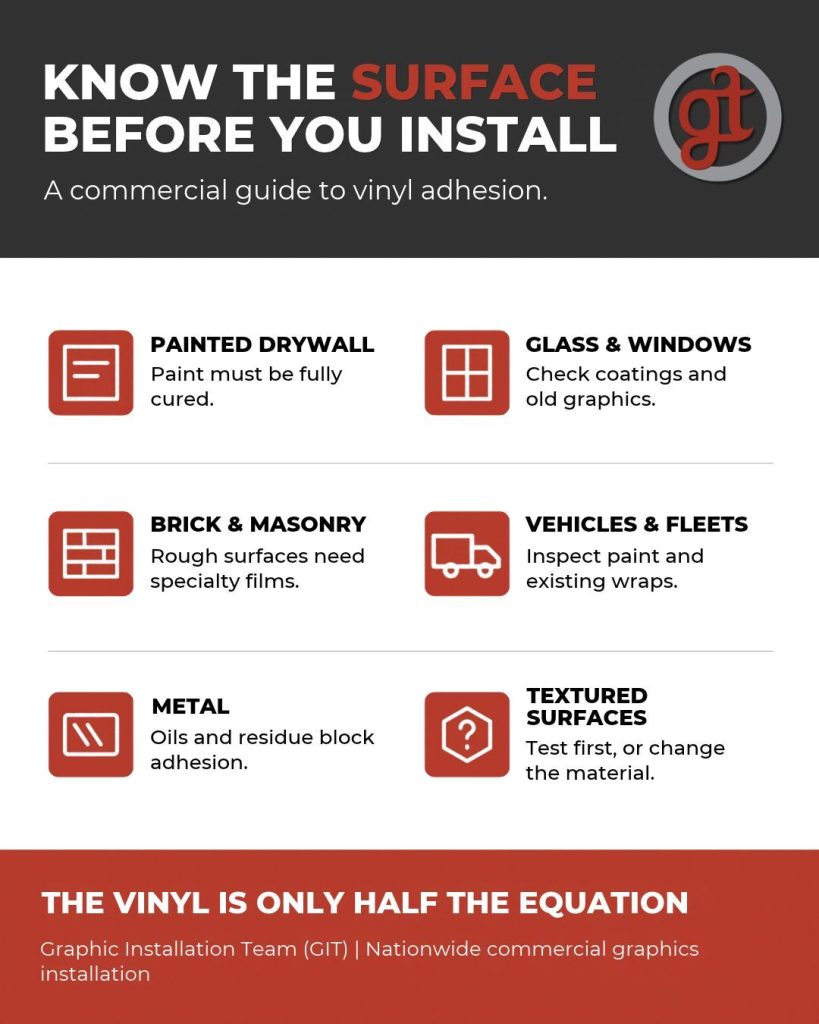
Installing Vinyl Graphics on Painted Drywall
Wall graphics and wall murals are common in offices, retail environments, schools, restaurants, healthcare facilities, and other commercial spaces.
However, not every painted wall is automatically ready for vinyl.
Paint type, finish, age, and wall condition can affect vinyl adhesion. Freshly painted walls can be particularly challenging because paint needs adequate time to cure before graphics are installed. Certain low-VOC paints, specialty coatings, and highly textured finishes may also present adhesion challenges.
Before a commercial wall graphics installation, it may be important to determine what type of paint was used, when the wall was painted, whether the paint is fully cured, whether the surface is smooth or textured, whether cleaning products may have left residue, whether existing vinyl or adhesive remains, and whether an adhesion test is recommended.
For larger wall mural installations, testing a small area before moving forward with the full project may help identify potential problems.
Installing Vinyl Graphics on Glass and Windows
Glass is generally an excellent surface for many types of vinyl graphics, but window installations still require careful planning.
The installer needs to understand whether graphics are intended for the first surface or second surface, whether the glass has coatings or films, and whether existing graphics need to be removed.
Window location also matters. Exterior-facing glass can be exposed to direct sunlight, heat, and weather. Interior retail windows may have displays, shelving or fixtures that restrict access. Large windows may require ladders, lifts, or specialized equipment.
For commercial window graphics installation, accurate measurements and clear installation specifications are especially important. Even small measurement errors can become obvious when graphics must align across multiple windows or architectural features.
Installing Vinyl Graphics on Brick and Masonry
One question GIT receives on specialty projects is whether vinyl graphics can be installed directly onto brick. The answer depends heavily on the surface.
Brick can range from relatively smooth to extremely rough and porous. Mortar joints, surface texture, coatings, and the condition of the masonry can all affect installation.
Specialty films are available for certain textured and masonry applications, and some applications may require the material to be worked into the surface using heat and specialized installation techniques. However, not every brick wall is a suitable candidate for every vinyl product.
Before quoting or scheduling graphics for brick, concrete, or masonry, installers may need photographs, detailed surface information, material specifications or a physical site survey. This is one situation where assuming “vinyl is vinyl” can quickly create problems.
Installing Vehicle Wraps and Fleet Graphics
Vehicles provide another unique installation surface. Professional vehicle graphics installation requires more than simply applying vinyl to painted metal.
Vehicle condition matters. Paint damage, rust, body repairs, aftermarket paint, ceramic coatings, waxes, residue, and existing graphics can all affect installation.
Existing vinyl is another major consideration. If a vehicle already has graphics or a full wrap, removal should generally be evaluated separately from the new installation. Older vinyl that has been exposed to years of Texas heat and sunlight may remove very differently than recently installed graphics.
For fleet graphics installation, inspecting or understanding the condition of the vehicles before installation can help establish realistic expectations for both removal and installation.
Installing Graphics on Metal and Other Smooth Surfaces
Smooth, properly prepared metal surfaces can often provide excellent substrates for vinyl graphics. However, “metal” can mean many different things.
Painted metal, bare metal, powder-coated surfaces, aluminum panels, and architectural finishes may each require different considerations.
Surface contamination is also important. Oils, cleaning products, manufacturing residue, and other contaminants may prevent proper adhesive contact even when a surface looks clean. Professional surface preparation should follow the requirements of the specific graphic material being installed.
What About Textured or Unusual Surfaces?
Modern commercial environments use an enormous variety of architectural materials, and designers continue to find creative places for branded graphics. That means installers are regularly asked to apply graphics to surfaces that aren’t traditional smooth walls or windows.
Before proceeding with graphics on an unusual surface, it is important to identify the substrate and determine whether the specified material is designed for that application.
Sometimes the answer is straightforward. Sometimes an adhesion test is appropriate. And sometimes the correct professional recommendation is that the proposed material should not be installed on that particular surface.
Finding that out before production is much better than discovering it during installation.
Why Professional Graphics Site Surveys Matter
When the installation surface isn’t clearly documented, a graphics site survey can provide valuable information before graphics are produced.
A professional site survey may document surface type and condition, accurate measurements, installation height, accessibility, existing graphics, obstacles and fixtures, equipment or lift requirements, photographs of the installation area, and potential installation challenges.
A site survey gives production teams, project managers, and installers better information before decisions are made. For complex commercial graphics installation projects, that information can help prevent costly production errors and installation delays.
The Vinyl Is Only Half of the Equation
Successful graphics installation isn’t just about choosing quality vinyl. It is about matching the right graphic material, installation method and preparation process to the actual surface.
Before producing your next wall mural, window graphic, vehicle wrap, retail graphic, or architectural graphics project, ask one simple question:
Will vinyl stick to that?
If the answer isn’t immediately clear, involve your professional graphics installation partner before production begins.
At Graphic Installation Team (GIT), we provide professional commercial graphics installation, graphics site surveys, wall mural installation, window graphics installation, vehicle and fleet graphics installation, vinyl removal, and nationwide graphics installation support.
Whether your project involves one location or multiple installations across the country, GIT can help evaluate installation conditions and identify potential challenges before your graphics reach the job site.
